
The word I never claimed
For forty years, I lived with invisible difficulties without once thinking of myself as disabled. Then my daughter said one sentence that changed how I saw my own experience.
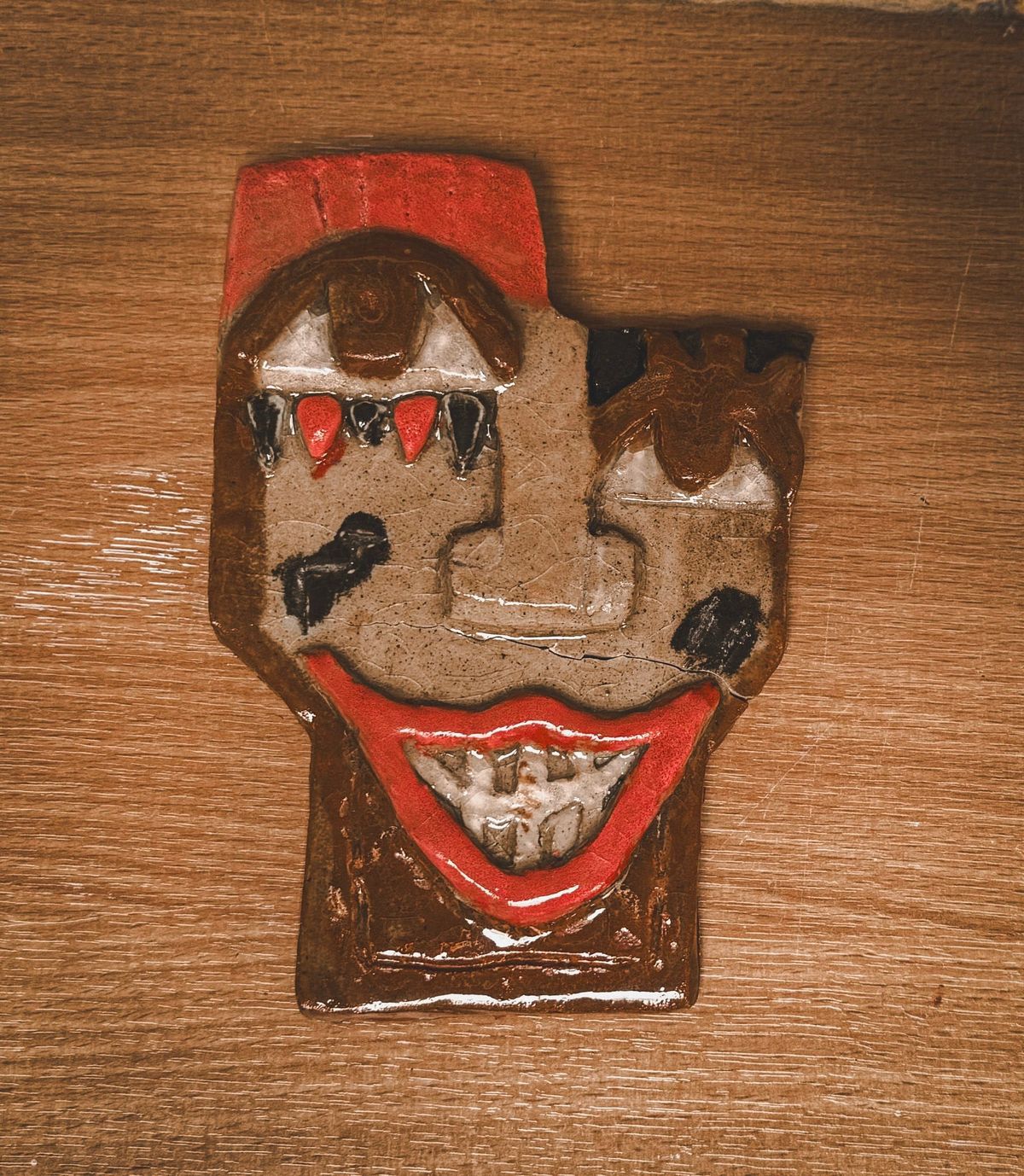
When someone else sees something about you that you've never quite seen yourself.
My daughter said it in passing, the way revelations sometimes arrive.
We were talking about neurodivergence, about the accumulating weight of labels, and she just said:
Well, you are disabled.
I stopped.
I had never thought of it that way.
Not once. In forty years of getting on with it.
I've lived with ME, neurodivergence and mental health difficulties. Some have floored me for weeks or months at a time. Others have simply become part of the complicated business of being me.
I've been refused PIP because I can do enough physically, apparently without sufficient recognition of what those things might actually cost me.
I've been a solo parent, an only child, a caregiver, self-employed since my twenties, and financially pressured into functioning when functioning wasn't really available.
And somewhere in all of that, I just never claimed the word.
Disabled.
Disability, in my mind, looked like something else. Something more visible. More accepted. The kind that comes with acknowledgement, with support, with people noticing.
Mine didn't look like that.
So I didn't look like that.
I also wouldn't want to take away from someone else's need, or insert myself as some kind of problem.
But I've been wondering where that thinking came from.
Why did I imagine that acknowledging my own difficulties might somehow diminish someone else's?
Why did I think that because I could manage something, however difficult, it meant I wasn't experiencing a disability?
And perhaps most interestingly, why had I never questioned any of this before?
I think part of the answer lies in independence.
I've been independent for so long that it's become something I rarely examine.
You get up. You do what needs doing. You find another way when the first one doesn't work. You adapt, reorganise, rearrange and occasionally abandon the entire plan because your mind or body has decided it's not participating today.
Then you try again tomorrow.
Sometimes that's determination.
Sometimes it's necessity.
And sometimes the two become so tangled that you can't really tell them apart.
There's also something rather peculiar about how we measure capability.
We tend to look at what someone achieves.
Did they get to work? Raise the children? Finish the project? Pay the bills? Turn up when they said they would?
We don't necessarily ask what it took.
Or what happened afterwards.
The exhaustion, the recovery time, the things that had to be sacrificed to make that one thing possible.
From the outside, someone might appear perfectly capable.
From the inside, it can be an entirely different experience.
And I've realised that I've often judged myself by the same external measures.
If I managed to do it, then surely I was fine?
Even when I wasn't.
But here's what I've been sitting with since my daughter said those few words:
The fact that I've always had to fight through, that I've had to be independent by necessity rather than choice, that the difficult weeks and months came and went and I pushed back through them mostly because there was no alternative, isn't evidence that I'm not disabled.
And during really difficult months, week after week, even month after month, the illnesses didn't feel they would ever get any better.
It may simply be what disability has looked like in my particular circumstances at the time.
And that's quite a different way of understanding forty years of my life.
I'm still not entirely comfortable with the word.
Perhaps because I don't particularly like being defined by anything. Not my achievements, my difficulties, my history, my qualifications or any of the other labels we collect along the way.
They're all parts of a person.
None of them is the whole person.
But perhaps acknowledging something isn't the same as allowing it to define you.
Perhaps it's simply being a little more accurate about your own experience.
And perhaps there is a difference between independence freely chosen and independence that has never really been optional.
I haven't reached some grand conclusion.
I haven't suddenly adopted a new identity or decided that one conversation explains everything.
But my daughter offered me a perspective I'd never considered.
And I've been turning it over ever since.
Forty years of not using a word doesn't dissolve overnight.
Nor does it necessarily need to.
But I am thinking about it differently now.
And I wonder how many of us have spent years living inside an understanding of ourselves that we've never thought to question.
Sometimes it takes someone else, and one perfectly ordinary sentence, to open a door you didn't even know was there.
In the world we live in, labels and understanding can have both power and purpose.
Not to confine us, but to help us recognise and express who we are. Without excuses, without hiding, without constantly masking ourselves to fit someone else's expectations.
They can help us understand what works for us, what doesn't, what supports us and what might need to change.
Ultimately, I see us as one in consciousness, but individual in expression.
And that means the way we organise our lives, our energy, our relationships and our work needs to reflect who we actually are, rather than who we're expected to be.
Which brings me to something bigger than my own experience.
As a society, I think we need to question and challenge the narratives we've accepted about what constitutes a normal, successful or functioning human being.
Because what works for some doesn't necessarily work for everyone.
And perhaps the point isn't to keep finding ways to fit ourselves into systems that don't accommodate us.
Perhaps it's time we started questioning, dismantling and only maybe rebuilding our systems.
Ax