
Is it just an old Cornish stone wall?
Sometimes an old Cornish stone wall is more than just a wall. A few thoughts about craftsmanship, time, pressure and the art of simply being.
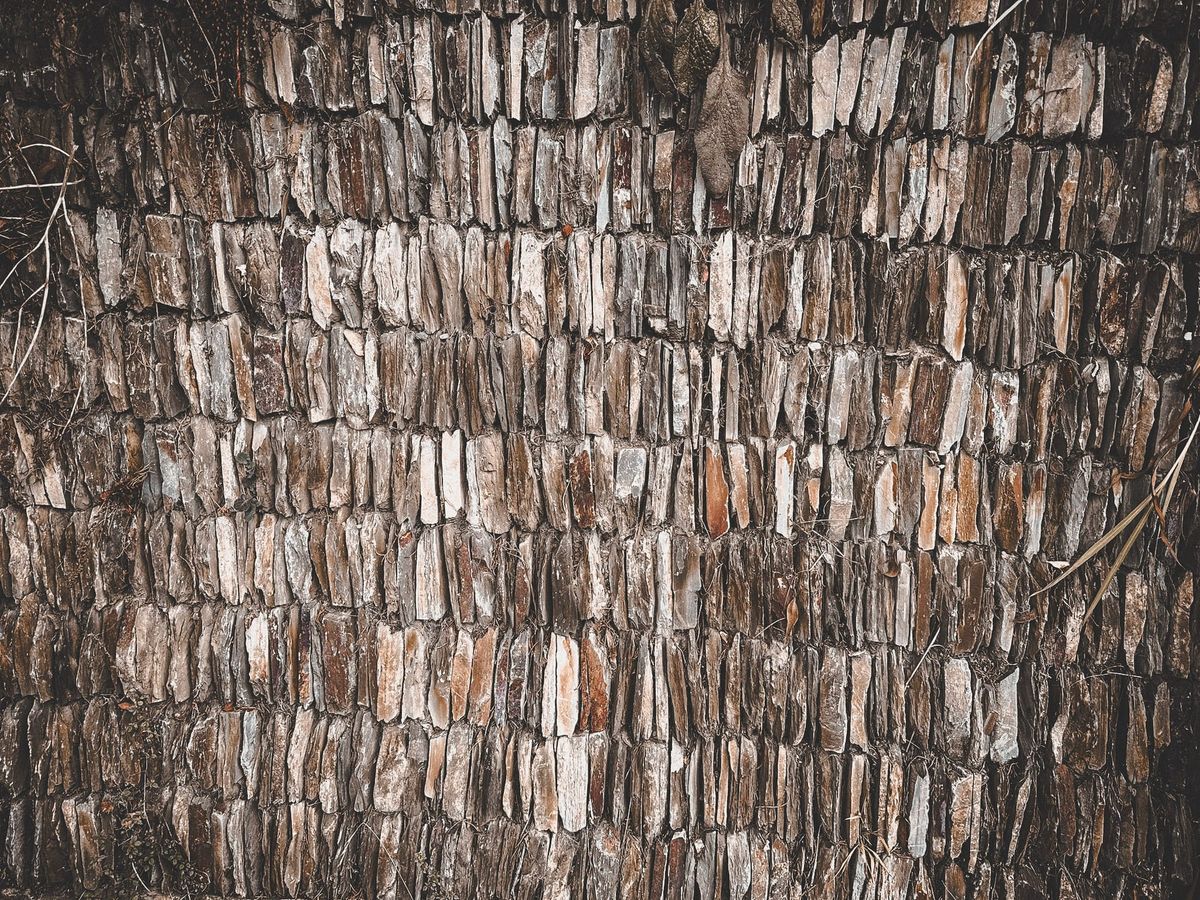
When I studied photography at college in my teens, our teacher was always keen on exploring texture.
It stayed with me as I've always loved tactile things like paper, stone and fabric.
When I came across this wall while walking my dog, I stopped to admire the craftsmanship, the detail, and to wonder how long it must have taken to build.
There are so many ancient crafts and trades where time wasn't necessarily the most important factor. Doing a good job was.
Nowadays, I think we expect both. An amazing job, preferably completed in about ten seconds.
But do those two things always work together?
Yes, we can do some things more quickly. But should we rush everything?
I don't think so.
I don't think any of us produce our very best when we're stressed, pressured and anxiety-ridden. How could we?
So sometimes, perhaps we should be more like an old stone wall and say, it takes as long as it takes. End of.
We cannot let modern express-train life constantly erode more traditional ways of being.
I know, easier said than done.
I've had plenty of days, particularly in my younger years, when everything felt like life or death. Get something finished. Meet the deadline. Hit the target. Get a move on.
But really, was it?
Mostly, no.
Of course, sometimes timing matters. A surgeon has to work within the demands of a procedure. A theatre performance starts at 7.30pm. Something has to go to print.
But how much of the urgency we experience every day is genuinely necessary?
And how much comes from the expectations, systems and constructs we've created around ourselves?
I've increasingly come to question that.
For years, I thought I must be something of an adrenaline junkie.
Jumping out of aeroplanes, travelling, riding my motorbike, white-water rafting, competing in kickboxing, earning black belts and collecting championships.
And some of those experiences were extraordinary. I wouldn't change them.
But there's a difference between the excitement of choosing an adventure and the relentless pressure of feeling you must always be doing, achieving or producing something.
There's also an enormous amount to be said for quiet, harmony, non-doing.
Just being.
When I was diagnosed with ME (myalgic encephalomyelitis), it didn't make much sense to me at the time.
I thought I was fit and healthy.
I was juggling work, music, performing with my band, martial arts, kickboxing competitions, travelling and helping at a local animal charity.
I thought I was happy, although I'd struggled with depression and anxiety for years.
And I pushed myself because that's what I'd learned to do.
Get on with it. Push through. Work hard. Keep going.
My neurodivergent mind was rarely short of ideas. A million things happening at once, several projects underway, always something else I wanted to do.
But my body was telling a different story.
Eventually, I couldn't keep going in the way I had before.
I can't say for sure that the pace of life caused my ME. But living with the illness certainly changed how I understood energy, limits and the consequences of constantly pushing beyond them.
And of course, alongside all the activities and ambitions, there was ordinary life happening too.
Relationships, family, finances, social commitments, trying to be happy, trying not to be depressed.
All the things that don't conveniently disappear just because our diaries are full.
It's a lot.
And I think particularly for young people, we need to question the kind of society we're asking them to navigate.
One so heavily focused on output, performance and achievement.
Yang, if you like.
There's absolutely nothing wrong with having purpose, ambition or feeling a magnetic pull towards doing something.
But I think there's a great deal wrong with expecting people to perform like perfectly functioning machines, day after day.
And I wonder how much of what we see in the wider world reflects that same imbalance.
The relentless pursuit of more. More growth, more power, more productivity, more consumption.
What happens when those values dominate not just our individual lives, but the systems and societies we create?
As above, so below. As within, so without. As the universe, so the soul.
It's something I've pondered on and realised how out of balance we are as humans, a society and our wider humanity.
Going back to the wall.
The choosing of the stones. The careful arrangement. The skill involved in bringing different shapes and sizes together to create something that endures.
I don't know how long this particular wall took to build, or what pressures its builders worked under.
But it reminds me of the value of patience, attention and craftsmanship.
And how easily those things can be lost when speed becomes the measure of everything.
If we consider yin and yang, there's a beautiful relationship between movement and stillness, activity and rest, expression and receptivity.
Not a battle.
Not a competition.
A relationship.
Creativity, in all its forms, needs room to breathe.
We need to learn when to slow down, when to pause, when to act and when to allow things to unfold without constantly trying to force them.
Of course, life will always bring moments of urgency.
Emergencies, deadlines, difficult chapters and times when we need to move quickly.
But those moments shouldn't have to become our permanent state of being.
And there should be space to recover afterwards.
I wish I'd understood more of that when I was younger.
I wish we'd teach young people that there are no medals for burnout.
That rest isn't failure.
That worth isn't measured by output.
And that a life doesn't have to be lived at full speed to be meaningful.
Looking at the wall again, the different stones, dark and light, thin and thick, each finding its place within the whole, I'm reminded of that continuous dance.
The ebb and flow.
Nature always shows us the way.
We just need to be smart enough to follow her lead.
And strong enough to trust our own innate wisdom.
Ax